I ship the production AI your team will inherit.
Independent software engineer. Multi-provider AI gateways, agent orchestration, real-time voice, evaluation harnesses, infrastructure as code. Twelve open-source repos. Fifty-seven long-form posts. One client at a time, every commit on me.
By the numbers
live12
Open-source repos
MIT-licensed
57
Technical posts
with charts + citations
10+
Years in production
shipping software
< 50ms
AI failover handoff
across 14 engines
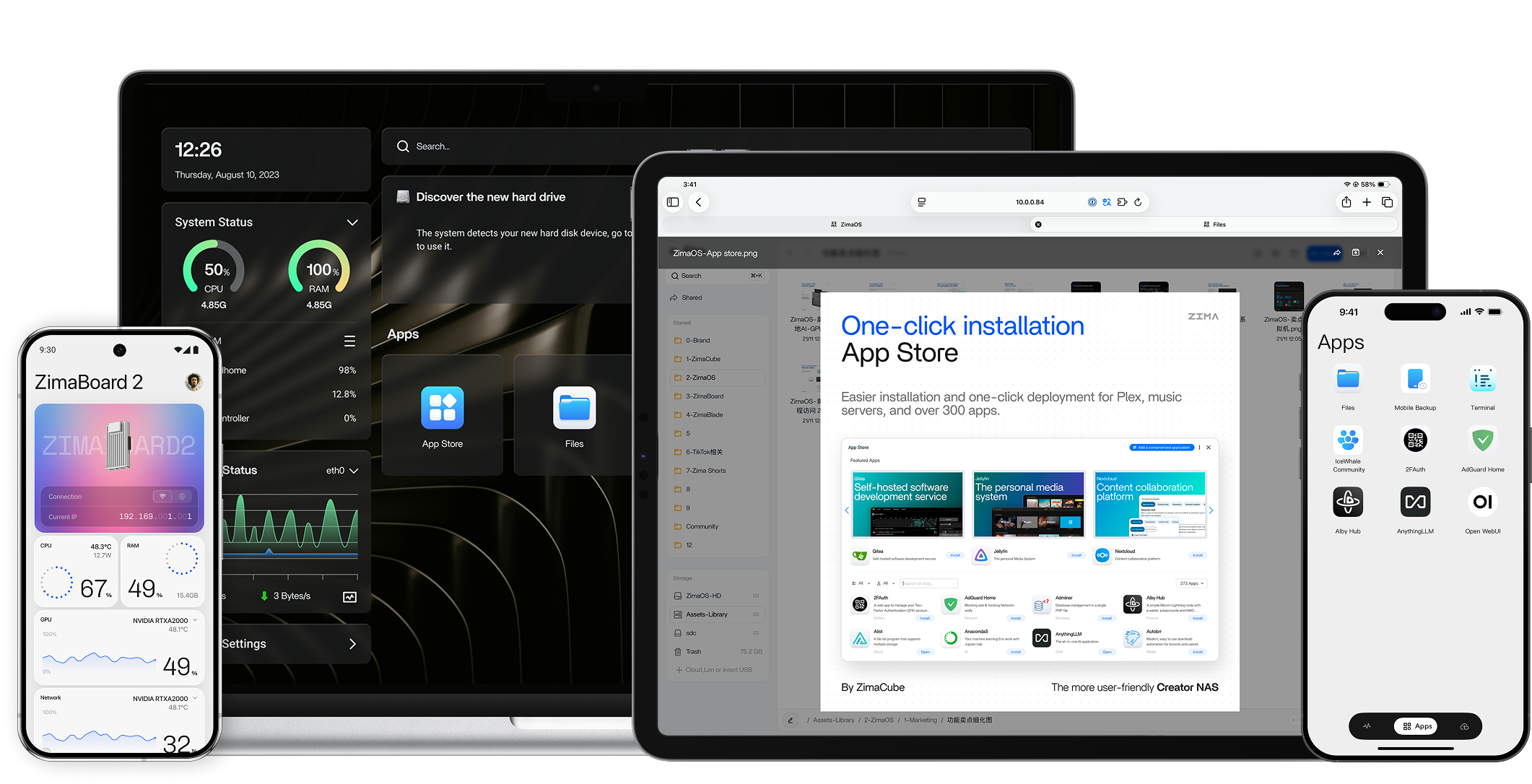
Turn the old PC in your cupboard into a NAS with ZimaOS.
Replace Google Drive, iCloud, Plex Pass, and a paid password manager with one machine you already own. Add a local AI model on the same box for free. The full step by step guide, hardware specs, install, Immich, Jellyfin, Tailscale, Ollama, mobile setup, free vs paid.

SarmaLink-AI
Multi-provider AI backend with 14-engine failover. OpenAI-compatible proxy, persistent memory, image generation, live web search. Now with cross-repo plugin system and Manus integration.
- · Sub-50ms handoff when an engine returns 5xx or rate-limits
- · Powered by DeepSeek V3.2 (685B), Gemini 3, GPT-OSS 120B
- · Intent-based plugin auto-routing to ten sibling repos
- · Manus webhook persistence for long-running agentic tasks
- · White-label guide with copy-paste v0 prompt
One project. One client. At a time.
Most agencies are running ten projects simultaneously. Your work gets squeezed between everyone else's deadlines. I do the opposite: I work with a single client until the job is done, then take on the next.
It means I'm expensive and selective. But it also means the work is consistently excellent, and you always know exactly where things stand.
Your project gets my full attention, not shared with four others
You talk directly to me, not an account manager
I know your codebase, your goals, and your constraints inside out
No briefing a junior developer who has never seen your product
Faster decisions, faster progress, better results
What I build
Six lanes I have shipped repeatedly enough to publish the underlying tools as open source. Each tile links to the matching service page and the open-source repo it draws from.
AI gateways and chat backends
Multi-provider failover, OpenAI-compatible proxies, persistent memory, image generation, live tools. Single-provider risk in production is a pager waiting to happen.
Agent orchestration
Durable multi-agent workflows with deterministic replay, journaled state in Postgres, tool/token/wall-clock budgets, BullMQ queue, Inspector UI. Workflows that survive restarts and pass audit.
Real-time voice and RAG
Sub-second WebRTC voice loops with pluggable STT/LLM/TTS adapters and barge-in. End-to-end RAG starters with cited streaming answers, ten-minute clone-to-ship.
Evals, observability, audit
Datasets as files, scorers as functions, traces in DuckDB, regression mode that fails CI when a release loses ground. OpenTelemetry across every workflow step.
Production infrastructure
Helm charts for Next.js with full observability stack preconfigured. Terraform composing Vercel + Supabase + Cloudflare + DigitalOcean. Eight minutes from empty cluster to fully observable.
Full-stack web applications
Next.js App Router, TypeScript, Supabase Postgres with Row Level Security, Resend, Vercel. Server actions, ISR, OG images, JSON-LD, the boring tests passed.
Why SarmaLinux?
I'm a solo engineer who partners directly with founders, CTOs, and technical leaders.
No account managers. No handoffs. Just focused, high-quality work.
When you work with SarmaLinux, you work with me, and I bring the same care to your project as if it were my own.
Join the SarmaLinux Builder Community
SarmaLinux is not only a technology studio. It is also a growing community of engineers, developers and builders collaborating on meaningful technology projects.
Engineers & Developers
Connect with skilled professionals working on meaningful projects
AI & Automation
Collaborate on AI systems and automation platforms
Experimental Tools
Build and test new software tools together
Knowledge Sharing
Learn from others and share your expertise
Members collaborate on AI systems, automation platforms, cloud architecture and experimental software tools. Anyone interested in building impactful technology is welcome to participate.
Join the CommunityTwelve open-source repos
Every project I publish solves a problem I hit in real client work and decided to write down properly. All MIT licensed.
AI gateways, agent orchestration, voice loops, evaluation harnesses, RAG starters, OCR pipelines, MCP servers, and the infrastructure glue underneath them.
The way I actually build things
Long form, opinionated walkthroughs of the systems I run for myself and for clients. Real commands, real config, real warnings about what tends to go wrong.
Building a multi-engine LLM gateway with failover
How Sarmalink-AI routes a single OpenAI-shaped request across 14 backends, fails over in under 50ms, and never returns a 500. Health checks, intent routing, cost guards.
Read playbookVoice agent stack with sub-second round trip
Mediasoup, Whisper, Groq, OpenTTS. The architecture I use for natural voice agents that respond in under a second on a £6 VPS.
Read playbookProduction MCP server, from skeleton to deployed
A real Model Context Protocol server: FastAPI, tools, resources, auth, deployment, observability. Built on the mcp-server-toolkit pattern.
Read playbookRunning Ollama on a Tesla P40, the actual setup
Bringing an old datacentre GPU back to life for local LLM inference. Cooling, driver gotchas, model picks (Gemma 3 12B, Llama 3.3, Qwen 2.5 Coder), real tokens-per-second.
Read playbookDeploying a Next.js app to a £6 VPS without Vercel
When the Vercel bill starts to bite, here is the exact recipe to move a production Next.js 16 app to a self-hosted VPS without losing any features.
Read playbookCloudflare R2 as S3-compatible storage for a Next.js app
Replace S3 in your stack with R2: zero egress fees, S3-compatible API, signed uploads from the browser. The pattern I use for invoices, blog images, contracts.
Read playbookStripe billing in a Next.js app, in 200 lines
Pricing tiers, customer portal, webhooks, recurring usage. The smallest amount of code that gets you a real, live, SCA-compliant billing flow.
Read playbookMagic link auth with Supabase, no foot guns
The exact magic-link flow I use on the admin and client portals: server actions, cookie session, callback handling, RLS hardening. With the four mistakes I made first.
Read playbookPostgres backups that actually restore
Daily pg_dump, point in time recovery, off site to R2, monthly restore drills. Most teams have backups. Far fewer have backups that work.
Read playbookA pragmatic Terraform stack for solo founders
What to put in Terraform, what to leave in the dashboard, and how to keep the diff small. The exact stack I use for Vercel, Supabase, Cloudflare, DigitalOcean.
Read playbookTurn an old PC into a NAS with ZimaOS
Replace Google Drive, iCloud, Plex, and a password manager with one box you already own. Hardware, install, Immich, Jellyfin, Tailscale, local Ollama AI, free vs paid.
Read playbookDeploying n8n on a VPS
A production-ready n8n install on a £6/mo VPS, Docker, Caddy, Postgres, backups, the lot. The setup I run for myself.
Read playbookSetting up Supabase with Vercel
Wiring Supabase to a Next.js app on Vercel without the auth foot-guns. RLS, server actions, type-safe queries.
Read playbookMigrating from Zapier to n8n
Cutting a £400/mo Zapier bill to £6 without breaking the business. A real migration plan with patterns and pitfalls.
Read playbookBuilding a Claude-powered receipt scanner
A working OCR receipt to JSON pipeline using Claude vision, with the prompt and post-processing.
Read playbookZero-downtime database migrations
The pattern I use to ship schema changes in production without a maintenance window. Add, deploy, backfill, switch, drop.
Read playbookReplacing SaaS with self-hosted tools
The five SaaS subscriptions I cancelled last year, and what they were replaced with. Real numbers, real trade offs.
Read playbookFrom the blog
Technical writing on AI, systems, and engineering decisions.
Why I prefer ZimaOS for a home NAS
There are five reasonable choices for a home NAS operating system. I run ZimaOS on my own box. Here is why it beat the others for me, and the kind of person it does not suit.
8 min read min readF1Hamilton vs Verstappen, by the numbers: where the rivalry sits in May 2026
Two drivers, two eras, one paddock. Lewis Hamilton's switch to Ferrari this season has put him in the same race as Max Verstappen more often, and the head-to-head numbers have caught the attention. We pulled the career figures, plotted them, read them honestly, and looked at where the next twelve months of races could shift them.
15 min read min readAIMicrosoft pulls back on AI tooling for staff: when the bill outgrows the engineer
Microsoft has reportedly cancelled the bulk of its direct Claude Code licences for staff and is redirecting engineers to GitHub Copilot CLI, six months after first rolling Claude Code out internally. The story sits inside a wider thread: at the unit-economics level, AI tooling is now expensive enough that even the people selling it are choosing carefully where to deploy it. The numbers, the strategy, and the implications, in detail.
13 min read min readTechnology for Good
Technology should not only power businesses, it should also help communities.
Charities
Helping charitable organizations operate more effectively with modern tools
Education
Supporting education programs with digital platforms and automation
Community Organizations
Enabling community groups to focus on their mission, not administration
SarmaLinux supports initiatives where modern technology can help charities, education programs and community organizations operate more effectively.
Automation systems, AI tools and digital platforms can help organizations focus on their mission instead of administrative work. Organizations working on meaningful causes are welcome to reach out.
charity@sarmalinux.comLet's build something good.
You've got a problem. I solve problems with software for a living.
The fastest way to find out if we can work together is to talk.
Stack I build with